


Ketamine Assisted Psychotherapy
You are ready to shift. You are ready to go deeper. You are ready to feel whole again.
Sometimes, knowing what needs to change isn’t enough. Ketamine can help you step outside familiar patterns, access emotions and perspectives that feel hard to reach, and experience yourself in a new way.
A guided, 6–10 week program
My KAP program brings together clinical therapy, somatic practices, Internal Family Systems (IFS), mindfulness, sound healing, and integration. You’re supported before, during, and after each ketamine session, and together we create a personalized experience that honors your nervous system, your history, your intentions, and the changes you’re ready to make.
What a medicine session looks like
Each session takes place in a safe, intentional space. We begin by checking in, grounding, and reconnecting with your intention. Your medication and dosage are determined by your medical provider and individualized treatment plan.
During the experience, you may notice shifts in perception, emotions, memories, sensations, or a dream-like state. There’s no single “right” way for it to unfold.
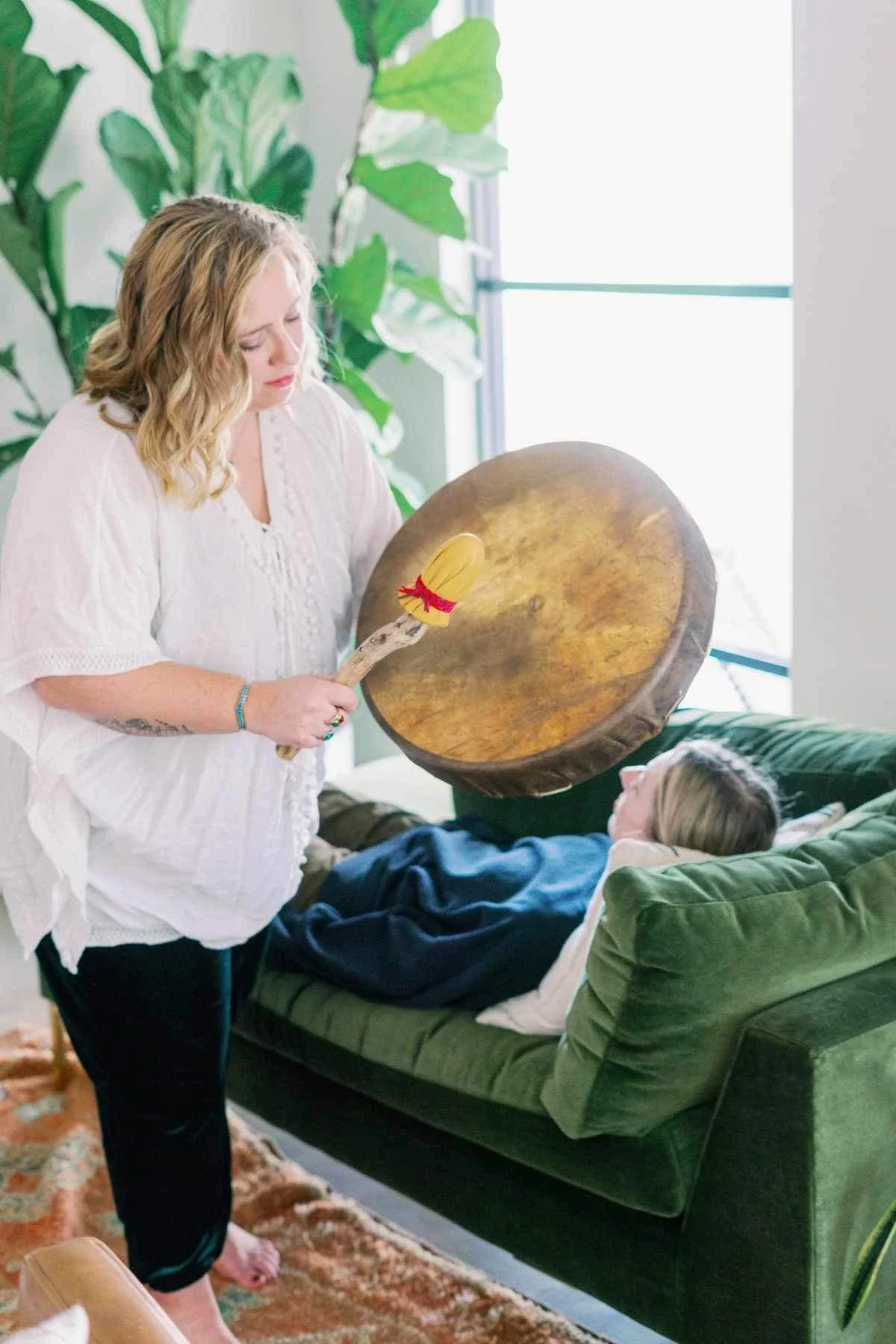
You are never left alone. I stay present throughout, offering grounded support through verbal guidance, breathwork, parts work, or sound healing as needed. As the medicine wears off, we take time to reconnect with your body, reflect, and help you transition safely. Integration sessions then help you bring your insights into everyday life.

KAP might be a good fit for you if:
You have tried medication and talk therapy for depression and anxiety and the symptoms are not improving
You have OCD, either tendencies or the full diagnosis
You have a history of addiction or are currently in an addiction pattern
You have complex trauma and feel that talk therapy has helped but there is still something deeper you can not access
Who is KAP for?
A video of Mckinley merchant LCSW describing ketamine therapy


Ketamine FAQs

-
I approach ketamine sessions as a ceremony—an intentional space for deep inner work, reflection, and transformation. I prepare the room through practices such as smudging and calling in safe ancestors and spirit guides. I believe this work is sacred, even though ketamine is not a traditional plant medicine. Intention is everything.
My approach weaves together psychotherapy, spirituality, somatic practices, and live sound healing. During the medicine journey, I may use singing, voice, and live sound to create a grounding and supportive environment while helping you stay connected to your intention. The sound becomes part of the experience—not as something you simply listen to, but as a way of creating rhythm, presence, connection, and space for whatever wants to emerge.
You are never left alone during the experience. I remain present throughout the session, holding a grounded therapeutic container while making room for the emotional, somatic, psychological, and spiritual dimensions of your experience.
-
At this time insurance does not cover ketamine. However, I am happy to provide a super bill that you can submit for possible reimbursement.
Medical Provider takes insurance so you pay your copay
$30-50 for Ketamine medicine
$250 for each ketamine session (6 in total)
Integration sessions can be billed to insurance. If I do not accept your insurance, it is a self-pay of $150.
This program usually ends up costing $1,100-1,400 Payment plans can be made available
-
For most people, their bodies feel heavy. Like they are moving in mud, you will most likely lie down the whole session, but are welcome to move if that’s what you need to do.
Your body feels distant, and it can feel like you are floating. Most report feeling a distance from painful memories or emotions. There is also an element of joy and ease that comes with ketamine
-
How It Works in the Brain
Unlike most antidepressants, which affect serotonin or dopamine levels and can take weeks to work, ketamine acts quickly by targeting a different neurotransmitter: glutamate.
Glutamate is the most abundant excitatory neurotransmitter in the brain, and it plays a key role in learning, memory, and mood regulation.
Ketamine works primarily by:
Blocking NMDA receptors, which are involved in regulating glutamate activity.
This blockade leads to a burst of glutamate release and stimulates AMPA receptors, triggering a chain reaction that strengthens and rebuilds connections between brain cells.
Promoting Neuroplasticity
One of ketamine’s most promising effects is its ability to promote neuroplasticity—the brain’s ability to form new connections and pathways.
Research shows that ketamine can help:
Repair and grow synapses (connections between brain cells) that may have been damaged by chronic stress or depression
Increase levels of BDNF (Brain-Derived Neurotrophic Factor), a protein that supports healthy brain function
Help the brain “reset” unhealthy thought patterns, making it easier to break out of negative emotional loops
Rapid Relief of Symptoms
Because of these effects, many people experience relief from depression or suicidal thoughts within hours or days, rather than weeks. This makes ketamine especially valuable for people in crisis or those with treatment-resistant depression.